
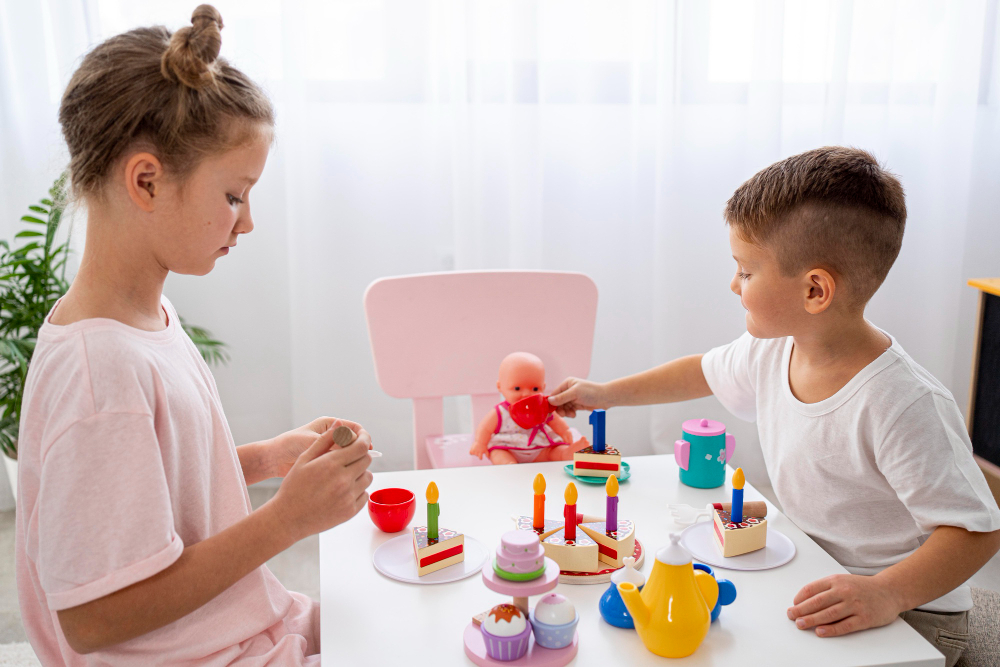
Play therapy is a specialized therapeutic approach designed for children who may struggle to express their thoughts and feelings through words alone. Since play is a child’s natural way of communicating, therapists use toys, games, art, and creative activities to help children explore emotions and resolve challenges.
Children may benefit from play therapy when they experience anxiety, behavioral concerns, trauma, grief, family changes, social difficulties, or school-related stress. Instead of direct questioning, therapists observe how a child interacts with toys and activities. Through guided play, children can safely express fears, frustrations, and feelings they may not yet have the language to describe.
Play therapy sessions are typically structured but flexible, allowing the child to lead while the therapist provides gentle guidance. The goal is to create a trusting environment where children feel understood and supported. Over time, children can develop stronger emotional regulation, improved problem-solving skills, and healthier ways to cope with difficult situations.
Parents and caregivers often play an important role in the process. Therapists may provide feedback, strategies, and tools to help families support their child’s emotional development at home. Collaboration ensures consistent support across different environments.
Early support through play therapy can positively influence a child’s self-esteem, relationships, and overall well-being. By addressing emotional and behavioral concerns early, children are better equipped to navigate challenges as they grow.
Play therapy recognizes that healing and growth can happen through play. With professional guidance and family involvement, children can build resilience, strengthen communication skills, and develop the confidence they need to thrive.
Play Therapy
Feb 20, 2026
Play Therapy: Helping Children Express, Heal, and Grow
Play therapy is a child-centered counseling approach that uses play to help children express emotions, process experiences, and develop healthy coping skills.